


Aging · 4
Research on how we age, healthspan and what the evidence says about slowing it.
- AgingArticle
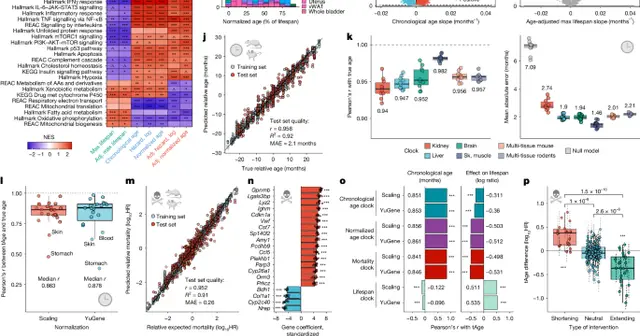
Shared gene expression signatures of aging across four mammals
A study published in Nature combined more than 11,000 transcriptomes from over 25 tissues in four mammal species to build aging clocks. The work is done in animals.
- AgingPaper
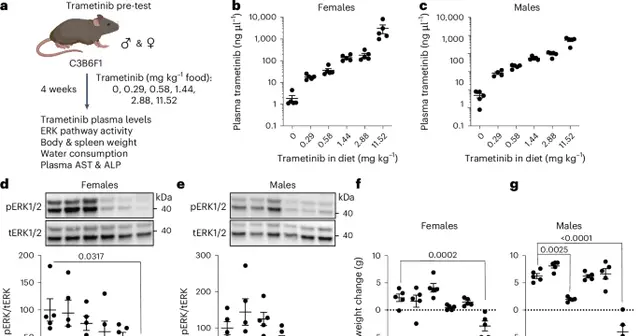
Trametinib and rapamycin extend lifespan in mice, study finds
A study in mice published in Nature Aging found that trametinib extended the lifespan of both males and females. Combined with rapamycin, the effect was additive and also reduced inflammation and tumor growth.
- AgingPost
Anti-IL-11 antibodies in mice and a report of longer lifespan
A social media report describes mice treated with anti-IL-11 antibodies living 20% to 25% longer. The source is an animal study, with no indication of the same effect in people.
- AgingPost
Canagliflozin, senescent cells and aging in mice: what the study suggests
A study in mice published in Nature Aging links the effect of canagliflozin, a diabetes medicine, to the removal of senescent cells. The findings are early, come from animals, and do not show anything about people.
- AgingPost
AMPK-linked protein tied to metabolism and lifespan in worms
A study in worms reports that AMPK activates the protein NUP50, which also affects metabolism, and that higher levels of it were associated with longer lifespan in these animals.
- AgingPost
Clearing senescent cells in aged mice extended lifespan in one study
One study in mice reports that monthly clearing of senescent cells reduced inflammation, improved physical and metabolic health and extended lifespan, especially in females. The results are early and come from animals.
- AgingPost
Mice study: gene reprogramming partly reversed eye aging
A Harvard study in mice reports that three genes used to reprogram eye cells helped attenuate eye aging and restore vision. The result comes from animals and is still preliminary.
- AgingPost
Partial reprogramming and the idea of epigenetic rejuvenation
An opinion-toned article explains partial reprogramming with Yamanaka factors, a research line proposing cellular rejuvenation. The approach is still under testing and is not a proven way to slow aging.
- AgingPost
Preprint: FAM162A overexpression linked to longer fruit fly lifespan
A preprint reports that fruit flies overexpressing the mitochondrial protein FAM162A lived about 25% longer, in an animal study not yet peer reviewed.
- AgingPost
Preprint links DNA methylation change rates to aging drift
A preprint reports patterns in how quickly DNA methylation changes at specific sites, changes the article says build up over time as aging drift. The work is preliminary and has not yet been peer reviewed.
- AgingPost
Smaller nucleolus linked to slower aging in yeast study
A study in yeast cells reported that keeping the nucleolus small appeared to slow aging, to a degree similar to calorie restriction. The results come from yeast, not people.
- AgingPost
Very long-lived people may offset markers of aging
A preprint analyzed the biological profile of a 118-year-old person and found that shortened telomeres and mutated blood stem cells did not necessarily predict poor health.
- AgingPost
Young blood stem cells and the lifespan of old mice
A study in mice reports that transplanting young blood stem cells into old animals may ease signs of aging and extend lifespan. This is early animal research with no direct application to people yet.
- AgingPost
AI identifies senescent cells by the shape of their nuclei
An article reports an artificial intelligence tool, developed by researchers at NYU, that identifies and tracks senescent cells based on changes in their nuclei. The article does not present clinical results.
- AgingPost
Early NewLimit data report partial restoration of youthful liver cell function
A founder of the company NewLimit reports preliminary experiments in which the prototype drug M0004, tested in disease models, partly restored function in aged liver cells. The results have not been peer reviewed.
- AgingPost
Fisetin clears senescent cells and prevents aortic aging in mice
In a study of diabetic mice, fisetin, a polyphenol found in strawberries, cleared senescent cells and prevented aging of the aorta.
- AgingPost
Mouse lifespan study of damage-repair treatments ends with a qualified result
A post by Aubrey de Grey of the LEV Foundation shares final survival curves from a mouse study of damage-repair treatments. The results are preliminary and come from animals.
- AgingPost
New conceptual 'Cell Annealing' model proposed to explain cellular aging
Researchers presented a conceptual model called Cell Annealing, which describes cell states as points on a high-dimensional landscape traveled during aging and reprogramming. It is a theoretical proposal that has not yet been tested.
- AgingPost
Post claims aged stem cells can act younger in a special liquid
A social media post says older stem cells grown in a liquid made from amniotic stem cells grew better, lived longer and had less damage. The scientific data behind this claim are not presented.
- AgingPost
Post claims new molecule shields mitochondrial DNA from stress damage
A social media post credits UC Riverside with a chemical tool that, according to the text, stops stress-induced breakdown of mitochondrial DNA. The claims have not been independently verified.
- AgingPost
Rapalink-1, a rapamycin-based drug, extends yeast lifespan in lab study
A study from Queen Mary University of London, carried out in yeast, found that Rapalink-1 extended lifespan in a way similar to rapamycin. The results are early and show no evidence of benefit in people.
- AgingPost
Social media post claims LSD extended worm lifespan by 25%
A social media post claims LSD extended the lifespan of worms by 25%. The claim has not been verified by scientific sources, and results in worms do not show whether the effect would occur in people.
- AgingPost
Stem cell therapy linked to rejuvenation signs in macaques
A 44-week study in macaques, published in the journal Cell, reported improvements in cognition, fertility and some aging markers after treatment with genetically modified stem cells. The results are preliminary and come from animals.
- AgingPost
Blocking a blood-borne protein improved muscle repair in aged mice
A study in aged mice identified the protein ReHMGB1, which may carry signals of aging through the bloodstream. Blocking it improved muscle regeneration and reduced inflammation. The results come only from animal research.
Not medical advice · Learn more