


Aging · 3
Research on how we age, healthspan and what the evidence says about slowing it.
- AgingArticle
Inhibiting CD38 raises NAD+ in macrophages from old mice
In cells from old mice, blocking the enzyme CD38 with compound 78c raised NAD+ levels and reduced inflammation and oxidative stress caused by oral pathogens. These are laboratory results, not findings in people.
- AgingArticle
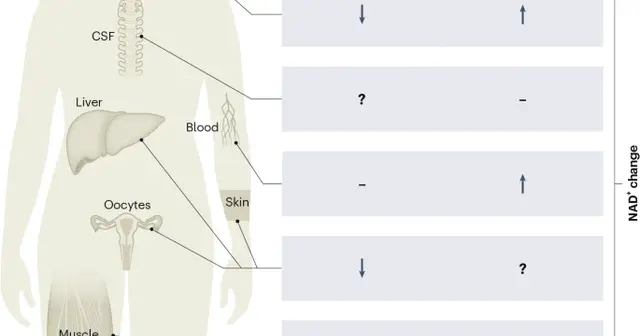
NAD+ precursors in human aging: what the clinical evidence shows
One review summarizes clinical trials of NAD+ precursors in people and the questions that remain open. A second review covers the role of NAD+ in bacterial immunity.
- AgingPaper
Naked mole rat cGAS mutations may help explain its long lifespan
A publication citing an article in Science reports four mutations in a naked mole rat enzyme, linked to more efficient DNA repair and less inflammation.
- AgingArticle
New treatment reported to extend lifespan in elderly male mice
A SciTechDaily article reports that a new treatment extended lifespan by more than 70% in elderly male mice, in an animal study.
- AgingPost
Roadmap lists 100 open problems in ageing science
A review gathers 100 unresolved questions about ageing and longevity, compiled with the research community and analyzed with natural language processing to find gaps in research.
- AgingArticle
Small molecule AA-20 boosts autophagy and extends worm lifespan
A study in C. elegans worms reports that the small molecule AA-20 increases autophagy, the cell's internal cleanup process, removes buildups of lipids and proteins, and extends the animals' lifespan, without inhibiting mTORC1. The results come from animals and do not show effects in humans.
- AgingPaper
Suppressing a stress-response pathway extended fly lifespan in preprint
A preprint study in fruit flies reported that suppressing the GCN2-ATF4 stress-response pathway, rather than activating it, extended lifespan. The work has not yet been peer reviewed.
- AgingPaper
Ubiquitin activates SPRTN protease to repair DNA-protein crosslinks
The article in Nature Communications reports that binding to ubiquitin activates the SPRTN protease, an enzyme that cuts toxic DNA-protein links and supports genome stability during DNA repair.
- AgingPaper
CD4+ T cells release telomere rivers in a preliminary study on rejuvenation
A preprint on bioRxiv, not yet peer reviewed, describes CD4+ T cells releasing telomere-containing vesicles, called 'rivers', and links their formation to fatty acid oxidation.
- AgingArticle
Cord blood metabolites linked to slower aging in worms
A study compared human umbilical cord blood with adult plasma and identified metabolites with anti-senescence properties. The findings come from experiments in cells and worms.
- AgingPaper
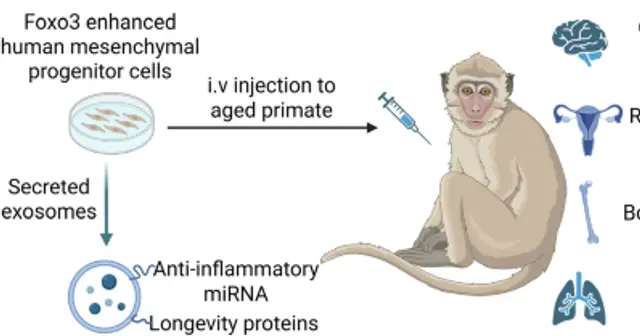
Engineered stem cells and aging in monkeys: a 2025 Cell study
A monkey study published in the journal Cell in 2025 tested engineered stem cells against signs of aging. The results come from animals and do not directly apply to people.
- AgingPaper
Genetic study links proteomic aging clock to longevity and disease
A preprint on medRxiv with 38,865 UK Biobank participants identified 27 genetic loci linked to proteomic age gap, a biological measure of aging, and a strong genetic correlation with longevity.
- AgingPaper
GrimAge clock predicts survival in cognitively healthy centenarians
A preliminary study, published as a preprint, followed 247 cognitively healthy Dutch centenarians and found that faster epigenetic aging measured by the GrimAge clock was linked to a higher risk of death.
- AgingPaper
IF1 protein and aging: preprint in mice and across species
A preprint not yet peer reviewed reports that the IF1 protein inhibits ATP hydrolysis and that higher IF1 correlates with greater maximum lifespan across species.
- AgingPaper
Kidney cell atlas links epithelial cells to epigenetic aging
An unreviewed preprint describes a single-cell multi-omic atlas of healthy and injured human kidneys, along with aged mouse kidneys. The authors report accelerated epigenetic aging, with tubular epithelial cells predominating in diseased kidneys.
- AgingPost
Mesenchymal cells may help rebuild the aging thymus
An article in Nature Biotechnology reports that a group of mesenchymal cells was able to restore thymus function in mice and in human tissue. The thymus is an organ tied to the body's defenses that shrinks with age. The findings are preliminary and come from animal studies and human tissue samples.
- AgingArticle
Placental cells may help test anti-aging compounds
Researchers reported in the journal Aging Cell that cells derived from the human placenta may help estimate possible anti-aging treatments. The evidence so far comes from cell studies, not studies in people.
- AgingPaper
Preliminary XPRIZE Healthspan trial reports anti-aging effects of a drug candidate
A news article reports preliminary results from a semifinal XPRIZE Healthspan clinical trial in people, in which a drug candidate from Tohoku University reportedly showed anti-aging effects.
- AgingArticle
Replacing mitochondria to recharge aging human cells: what the news reports
A ScienceAlert article reports new research in which aging human cells were 'recharged' by replacing their mitochondria, the structures that supply energy to the cell.
- AgingPaper
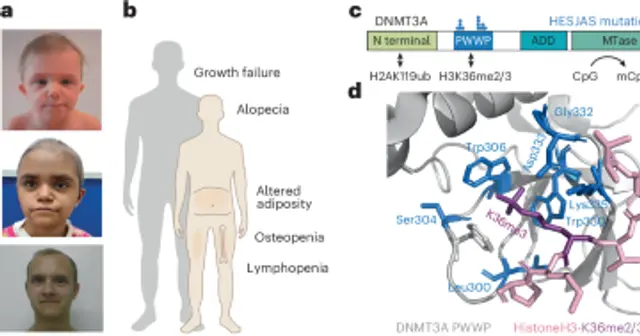
Changes in DNA methylation linked to accelerated ageing in mice and people
A study published in Nature Genetics reports that gain-of-function DNMT3A mutations, which affect DNA methylation, show signs of accelerated ageing in patients and mice.
- AgingArticle
First patient treated in Phase 1 trial of ER-100 epigenetic therapy
Life Biosciences reported that the first patient has been treated in a Phase 1 trial of ER-100, an experimental epigenetic therapy. The trial assesses safety, tolerability and visual function in people.
- AgingPaper
Machine learning predicts drugs that extend lifespan in worms
A preprint used machine learning models trained on mouse longevity data to flag possible anti-aging candidates. In C. elegans worms, 6 of 22 predicted compounds extended lifespan.
- AgingArticle
Mayo Clinic team uses DNA aptamers to tag senescent cells in mice
Mayo Clinic researchers reported, in a study in mice, that synthetic DNA molecules called aptamers can reliably tag senescent cells in tissue.
- AgingArticle
Review links epigenetic drift and cell stress to senescence in aging
A review discusses how epigenetic changes and cell stress may lead to senescence, a process linked to aging and age-related diseases.
 biorxiv.org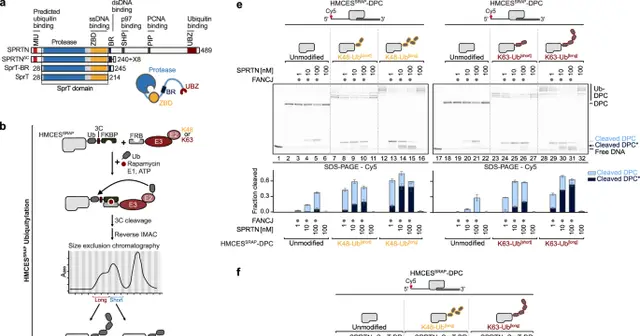


Not medical advice · Learn more