


Mental health
Mood, sleep, stress, focus and the brain, from the research and the clinic.
- Mental healthPost
Daytime naps linked with larger brain volume in a large study
A study of about 400,000 people linked daytime napping with greater total brain volume. The result is observational and does not prove that napping causes this effect.
- Mental healthArticle
Brain energy metabolism and cognitive impairment in psychosis
A new report describes an association between impaired brain energy metabolism and cognitive impairment in psychotic disorders, a link that future research is expected to explore.
- Mental healthArticle
Better diets linked to sharper focus in teens with attention disorders
A small study links a Mediterranean-style diet and certain vitamins to better performance on attention tests in teens with attention disorders.
- Mental healthArticle
Brain white matter linked to how trauma memories intrude
A PsyPost report describes a study linking the microscopic integrity of white matter in specific brain pathways to how traumatic flashbacks are experienced.
- Mental healthPaper
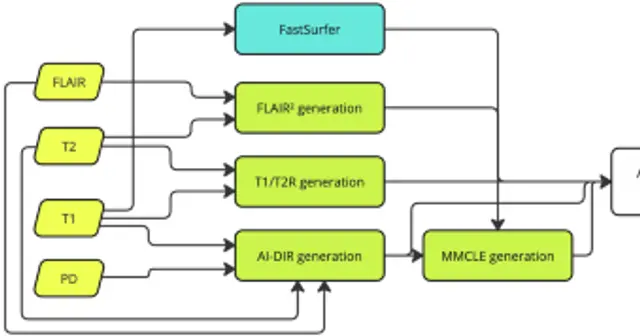
AI-enhanced MRI reveals cortical lesions in multiple sclerosis
A study reanalysed standard MRI scans from a large multiple sclerosis clinical trial using multicontrast processing and deep learning, improving detection of cortical lesions.
- Mental healthArticle
Brain wave bands separate causal and contextual signals in visual decisions
A research article reports that high-gamma activity in the visual cortex reflects causal contributions to perceptual decisions, while lower frequency bands indicate contextual influences.
- Mental healthArticle
Brainstem circuit linked to long-lasting anxiety in mice
A PsyPost report on a mouse study linked activating a brainstem circuit to long-lasting anxiety. Temporarily switching it off blocked effects of intense stress. These are animal research results, still far from application in people.
- Mental healthArticle
Chronic poor sleep linked to inflammation and faster brain aging
A study published in EBioMedicine, a journal in The Lancet family, linked chronic poor sleep quality to higher inflammation and a larger brain age gap, a sign of accelerated brain aging.
- Mental healthPaper
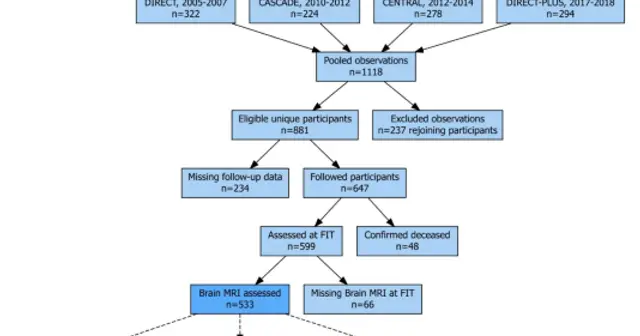
Less visceral fat over time linked to slower brain shrinkage in midlife
A study in Nature Communications of 533 adults, average age 61, linked sustained loss of visceral fat to less brain atrophy and better cognition, mainly through blood sugar control.
- Mental healthArticle
Navitoclax nanoparticles reduce aged cells in the brain barrier of rats
In naturally aged rats, nanoparticles releasing navitoclax reduced senescent cells lining the blood-brain barrier and decreased barrier leakage. This is early preclinical research in animals, with no cognitive gains reported.
- Mental healthArticle
Neuroinflammation and treatment resistance in depression
An article in Frontiers in Pharmacology describes major depression as a multi-system disease and focuses on the link between inflammation and depression that does not respond to standard treatment.
- Mental healthPaper
Systematic review of ketogenic interventions in serious mental illness
A systematic review and meta-analysis of 73 studies examines ketogenic diet interventions and their effects on neuropsychological and metabolic outcomes in serious mental illness and neurocognitive disorders.
- Mental healthPost
Chronic inflammation may shift brain repair cells away from making neurons
A study published in Nature Communications found that chronic TNF-α pushed human hippocampal progenitor cells into an interferon-driven immune alert state, suppressing neurogenesis. The evidence comes from cell models, not people.
- Mental healthPost
Ergothioneine may strengthen circadian rhythm in rodents
A study in rodents suggests that ergothioneine may increase circadian robustness and counter NAD+ depletion. The results come from research in animals.
- Mental healthPost
Fecal transplants from depressed patients induce depression-like traits in rats
In a rat study, fecal transplants from 34 people with depression produced reduced sucrose preference, anxiety-like behavior and altered tryptophan metabolism.
- Mental healthPost
LSD-derived compound improved mood and cognition in mice
In a study of mice, JRT, a modified version of the LSD molecule, improved behaviors linked to cognition and mood without psychosis-like symptoms. This early animal research is not yet a treatment.
- Mental healthPost
Mental health improved with age in a study of 1,546 adults
A study of 1,546 adults aged 21 to 100 reported that physical health and cognitive function declined over adult life, while mental health improved. The findings suggest these areas can follow different paths.
- Mental healthPost
Night-time low blood sugar can disrupt sleep in healthy adults
A study of healthy people linked drops in blood sugar during the night to lighter sleep and early waking.
- Mental healthPost
Probiotics versus placebo in major depression: results of an 8-week trial
A randomized clinical trial lasting 8 weeks compared probiotics with placebo in people with major depression. The trial reported improved depressive symptoms and some metabolic markers.
- Mental healthPost
Red light improved memory in mice, an animal study
A mouse study reported that red light reduced oxidative stress and restored memory. It is early research, and results in animals do not yet show a treatment for people.
- Mental healthPost
Removing FTL1 protein restored synapses and memory in aging mice
A UCSF study in mice linked the FTL1 protein to synapse loss and memory decline. In older mice, removing it restored synapses and memory.
- Mental healthPost
Single creatine dose linked to brain changes in sleep-deprived adults
A Scientific Reports study of 15 healthy people kept awake for 21 hours found that a single creatine dose improved cognitive performance and changed brain energy metabolism within hours, under specific metabolic conditions.
- Mental healthPost
Bowel evacuation linked to faster Stroop times in elite triathletes
A randomized crossover trial in elite triathletes found faster Stroop test response times after bowel evacuation. Near-infrared measurements of the prefrontal cortex showed no relevant change.
- Mental healthPost
L-theanine trial links lower stress and cortisol in people
A double-blind, placebo-controlled, crossover trial in people found that an L-theanine drink reduced self-reported stress and cortisol during a cognitive stressor. Alpha brain activity rose only in people with higher anxiety.



Not medical advice · Learn more