


Aging
Research on how we age, healthspan and what the evidence says about slowing it.
- AgingArticle
Senescence may not fully explain aging of blood stem cells
A publication argues that changes seen in aged blood stem cells are not fully explained by senescence, the state in which cells stop dividing but remain in the body.
- AgingPost
Study suggests menopause begins more than a decade before final period
An analysis of 300 million exams, led by Uri Alon and colleagues using a mathematical method from astronomy, indicates that menopause begins more than a decade before the last period.
- AgingArticle
Exercise and multidomain programs improve healthspan measures in trials
A systematic review of randomized clinical trials in people found that exercise and multidomain interventions were effective at improving healthspan measures, such as intrinsic capacity and quality of life.
- AgingPaper
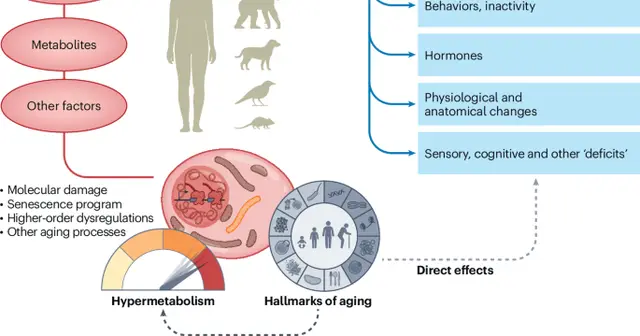
Nature Aging article proposes a brain-body energy model of aging
A perspective article in Nature Aging proposes an energy-conservation model linking the brain and body. It connects brain responses to cytokine signals of hypermetabolism with cellular markers of aging. The idea has not yet been tested.
- AgingArticle
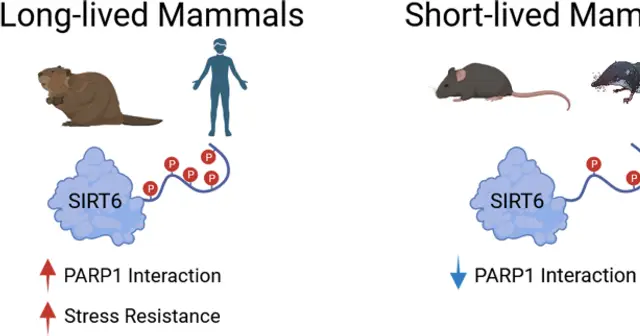
Mammal lifespan linked to SIRT6 phosphorylation sites
A comparative study across species links phosphorylation sites in the C-terminal domain of the SIRT6 protein to maximum lifespan in mammals, and points to a DNA repair protein as a possible factor in these differences.
- AgingPaper
Preprint maps muscle aging cells in 15 human donors
A preprint on bioRxiv, not yet peer reviewed, describes a single-cell atlas of muscle from 15 donors across adult life. The author claims that chronic inflammation plays a major role in human muscle aging.
- AgingPaper
SGLT2 inhibition clears senescent cells and eases aging traits in mice
A study in mice reports that SGLT2 inhibition reduced the burden of senescent cells and eased aging traits, through greater immune surveillance.
- AgingPaper
Bat longevity and DNA virus-driven adaptation in Myotis species
A comparative genomic study of North American Myotis bats examines genes linked to long life and tolerance of infectious diseases. The work has not yet been peer reviewed.
- AgingArticle
BCG vaccine linked to reversing remyelination failure in aging
A publication citing a summary of a Cell Immunity study reports that the BCG vaccine may reverse the remyelination failure linked to aging. The finding is preliminary and still needs confirmation.
- AgingArticle
Citrate metabolism and inflammation in senescent cells
A Cell Reports article links citrate metabolism, through the enzyme ACLY, to inflammatory signals from senescent cells and suggests ACLY as a possible target for controlling the SASP. It is early research.
- AgingPaper
Loss of H3K9 trimethylation linked to premature aging in a preprint
A bioRxiv preprint, not yet peer reviewed, reports that loss of H3K9 trimethylation leads to premature aging. Epigenetic changes are being studied as a possible driver of aging, relevant to research on healthy longevity.
- AgingPaper
Machine learning predicts mouse lifespan-extending compounds (preprint)
A preprint on bioRxiv describes a computer model that tries to identify, from mouse lifespan data, which drugs could extend life. The study has not yet been peer reviewed.
- AgingArticle
New framework links epigenetic clocks to programmed aging mechanisms
Authors present an article proposing a conceptual framework to explain epigenetic clocks, including Horvath's, in terms of programmed aging mechanisms.
- AgingPaper
Partial reprogramming gene therapy extends lifespan in mice
A study in mice from the Belmonte group reports about a 12% increase in lifespan with the Cdkn2a-OSK gene therapy, and about 38% more remaining life when it was started at 18 months of age.
- AgingPost
Rate of DNA methylation change and maximum lifespan in mammals
A modeling study of 348 mammal species reported an inverse relationship between how fast DNA methylation changes and the maximum lifespan of each species.
- AgingPaper
Reprogramming old cells extended mouse lifespan and aided wound healing
A study in mice reported that reprogramming old cells with the OSK factors improved wound healing and lifespan without causing cancer. Human trials are described as planned, not as results.
- AgingArticle
Senolytic therapy and brain barrier integrity in an animal tauopathy model
A study in animals with tauopathy reports that senolytic therapy preserved the integrity of the blood-brain barrier and promoted microglia homeostasis, an early finding.
- AgingArticle
Targeted partial reprogramming reverses age-related cell signs in animals
A study in animal models tested a precise partial reprogramming method that reversed some age-linked cell changes while keeping cell identity. This is preclinical evidence, still far from proven effects in people.
- AgingArticle
University of Queensland study links master regulator AP-1 to gene shifts in aging
A University of Queensland study analyzed molecular data from people and mice of different ages and found that the regulator AP-1 activates adult-associated genes and lowers early developmental genes across several cell types.
- AgingArticle
Calorie restriction in mice: longer lifespan, lower resilience
A study published in PLOS ONE, carried out in mice, reports that calorie restriction may extend the animals' lifespan but appears to leave them less resilient. This is an animal result and does not directly show the effect in people.
- AgingArticle
DrugAge database of ageing-related drugs updated
An article announces an update to DrugAge, a database of drugs studied for their effects on ageing. Databases like this help compare compounds already tested, but they do not prove benefit.
- AgingPaper
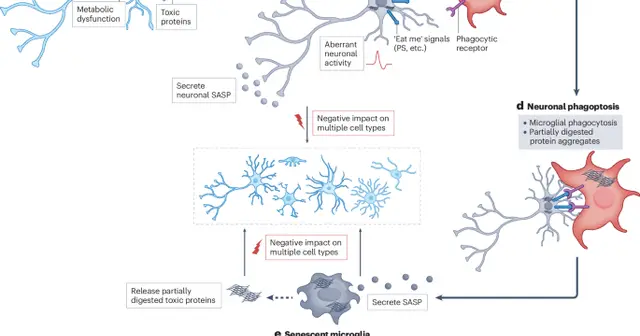
How to target senescent cells in the brain: what a Nature review says
A review published in Nature Reviews Drug Discovery gathers research on senescent cells in the central nervous system, including drugs in development that aim to remove them or modulate their effect on nearby tissue.
- AgingPaper
IL-23R flagged as a possible biomarker of aging linked to senescence
A study in mice and human plasma identifies IL-23R as a protein that rises with age and is associated with cellular senescence.
- AgingArticle
Mitochondrial stress response proposed as a possible anti-aging target
A publication cites an article proposing the mitochondrial stress response as an approach against aging. The idea is still early-stage and does not report results from tests in people.

 biorxiv.org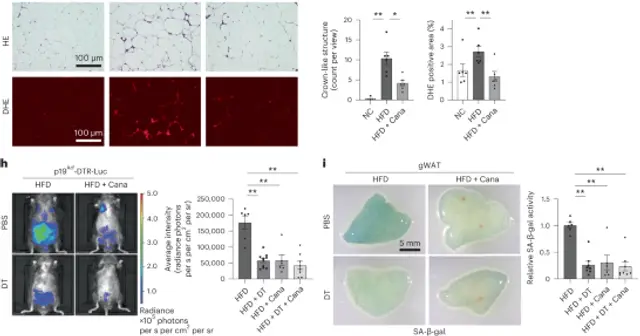

Not medical advice · Learn more