


Aging · 2
Filter by type: Article73
- 12 days ago thebrighterside.news
Age-resistant stem cells reported to improve tissue health in monkeys
A news article reports that a study in monkeys found age-resistant human stem cells improved brain, bone and tissue health, with no side effects reported.
- 12 days ago embopress.org
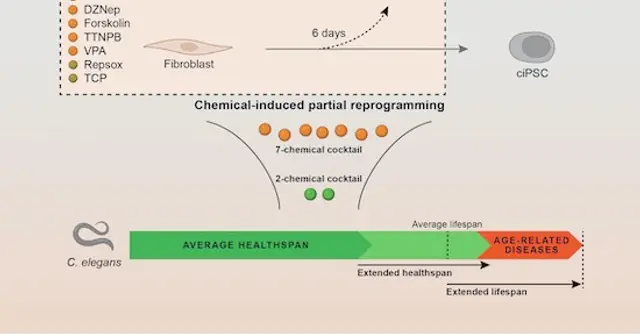
Chemical reprogramming eases aging markers and extends lifespan
A study published in EMBO Molecular Medicine reports that cocktails of small molecules reduced cellular aging markers and extended lifespan. It is early research, not a treatment.
- 12 days ago lighthouse.mq.edu.au
Human protein found to help repair damaged DNA, study says
Researchers at Macquarie University report that a protein naturally present in human cells takes part in repairing damaged DNA, with possible relevance to age-related diseases.
- 12 days ago zenodo.org
Poster proposes that somatic mutations and cancer risk may help drive aging
A theoretical poster presented at a German aging congress proposes that cancer risk has been a dominant force in the evolution of aging.
- 12 days ago researchsquare.com
Seaweed fucoidan linked to fewer senescent cells in mice, preprint study finds
A preprint study in mice reports that a seaweed sugar compound, fucoidan-FV, reduced senescent cells and improved DNA repair. The author claims it improved the animals' health. This is early animal research, not human evidence.
- 12 days ago scitechdaily.com
Declining menin in hypothalamus linked to aging in mice
A study in mice reports that falling menin levels in the hypothalamus trigger inflammation and speed up aging. Raising menin or giving D-serine restored memory, learning and physical vitality in older mice.
Inhibiting CD38 raises NAD+ in macrophages from old mice
In cells from old mice, blocking the enzyme CD38 with compound 78c raised NAD+ levels and reduced inflammation and oxidative stress caused by oral pathogens. These are laboratory results, not findings in people.
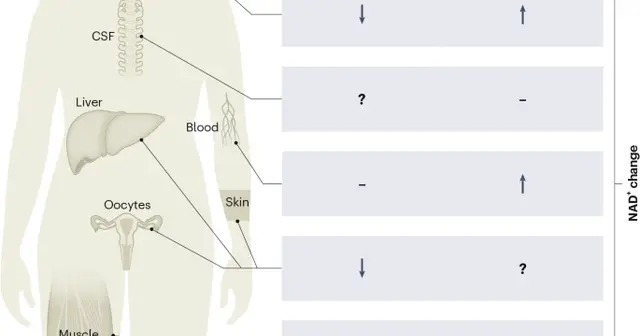
NAD+ precursors in human aging: what the clinical evidence shows
One review summarizes clinical trials of NAD+ precursors in people and the questions that remain open. A second review covers the role of NAD+ in bacterial immunity.
- 12 days ago scitechdaily.com
New treatment reported to extend lifespan in elderly male mice
A SciTechDaily article reports that a new treatment extended lifespan by more than 70% in elderly male mice, in an animal study.
Small molecule AA-20 boosts autophagy and extends worm lifespan
A study in C. elegans worms reports that the small molecule AA-20 increases autophagy, the cell's internal cleanup process, removes buildups of lipids and proteins, and extends the animals' lifespan, without inhibiting mTORC1. The results come from animals and do not show effects in humans.
- 12 days ago lifespan.io
Cord blood metabolites linked to slower aging in worms
A study compared human umbilical cord blood with adult plasma and identified metabolites with anti-senescence properties. The findings come from experiments in cells and worms.
- 12 days ago lifespan.io
Placental cells may help test anti-aging compounds
Researchers reported in the journal Aging Cell that cells derived from the human placenta may help estimate possible anti-aging treatments. The evidence so far comes from cell studies, not studies in people.
- 12 days ago sciencealert.com
Replacing mitochondria to recharge aging human cells: what the news reports
A ScienceAlert article reports new research in which aging human cells were 'recharged' by replacing their mitochondria, the structures that supply energy to the cell.
- 12 days ago clinicaltrials.gov
First patient treated in Phase 1 trial of ER-100 epigenetic therapy
Life Biosciences reported that the first patient has been treated in a Phase 1 trial of ER-100, an experimental epigenetic therapy. The trial assesses safety, tolerability and visual function in people.
- 12 days ago techtimes.com
Mayo Clinic team uses DNA aptamers to tag senescent cells in mice
Mayo Clinic researchers reported, in a study in mice, that synthetic DNA molecules called aptamers can reliably tag senescent cells in tissue.
Review links epigenetic drift and cell stress to senescence in aging
A review discusses how epigenetic changes and cell stress may lead to senescence, a process linked to aging and age-related diseases.
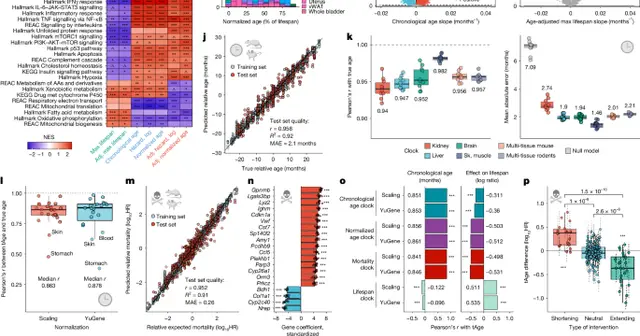
Shared gene expression signatures of aging across four mammals
A study published in Nature combined more than 11,000 transcriptomes from over 25 tissues in four mammal species to build aging clocks. The work is done in animals.
- 12 days ago journals.plos.org
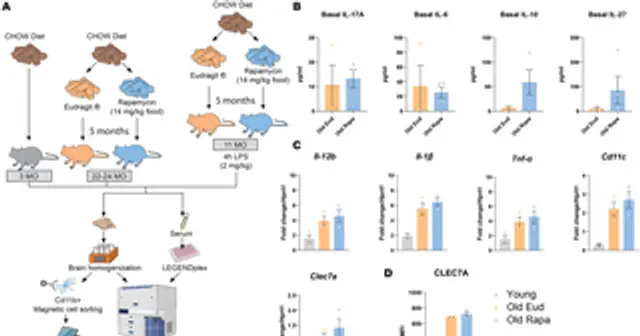
Long-term low-dose rapamycin and aging-linked immune cells
A study published in PLOS ONE reports that long-term exposure to low-dose rapamycin limited the expansion of age-linked gamma delta T cells and neuroinflammation, with small overall immune changes. The findings are preliminary.
- 12 days ago rapamycin.news
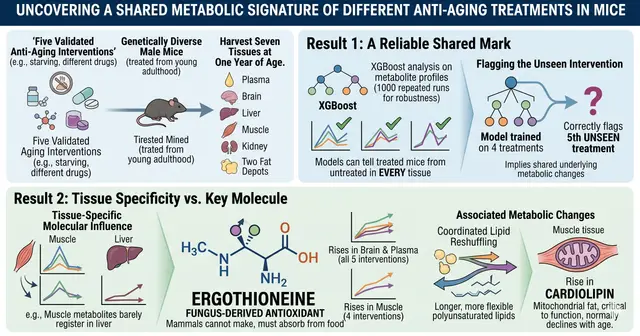
Partly overlapping metabolic patterns across five aging-related interventions
A study in mice compared five aging-related interventions across seven tissues. Metabolic patterns partly overlapped, and a machine learning model could identify the treated mice.
Review examines biological clocks that track aging through blood proteins
A review by Eric Topol and a coauthor examines so-called biological clocks, which estimate the pace of aging from blood proteins, and links them to functional health, longevity and disease.
- 12 days ago link.springer.com
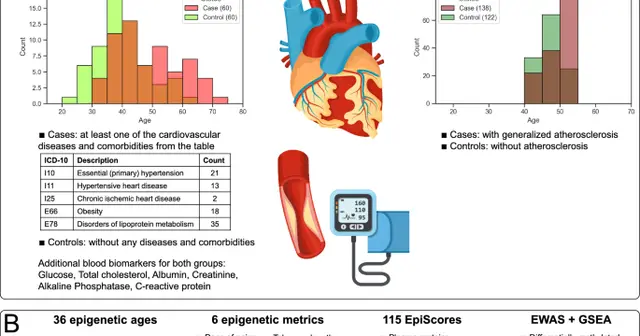
Epigenetic aging clocks and biological aging in men with cardiometabolic disturbances
A study of men with cardiometabolic disturbances compared different epigenetic aging clocks. Some, including GrimAge and DunedinPACE, detected accelerated biological aging, while first-generation clocks largely did not.
- 12 days ago onlinelibrary.wiley.com
Lacking LET-607 extends lifespan in animal study
A study in C. elegans worms reports that worms without the LET-607 protein lived longer, through a process linked to the cell's stress response. The results come from animals and have not been tested directly in people.
- 12 days ago
 pmc.ncbi.nlm.nih.gov
Longevity Aesthetics: A New Conceptual Framework for Aesthetic Medicine
A conceptual article proposes that aesthetic medicine move beyond correcting visible signs of aging and adopt a longevity model based on geroscience, which has not yet been tested in practice.
- 12 days ago link.springer.com
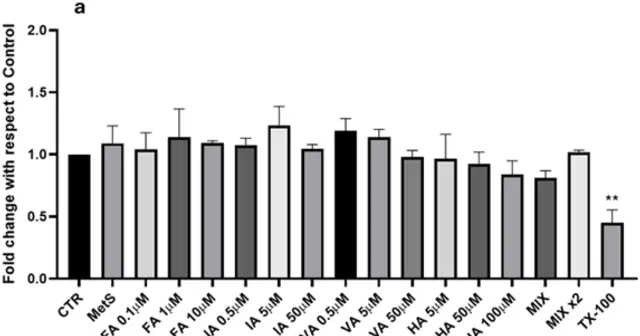
Wild blueberry metabolites linked to slower telomere shortening in cells
A laboratory study in cells found that metabolites of wild blueberry polyphenols slowed telomere shortening in an in vitro model of metabolic syndrome. The result has not been tested in people.


Not medical advice · Learn more