


Wild blueberry metabolites linked to slower telomere shortening in cells
A laboratory study in cells found that metabolites of wild blueberry polyphenols slowed telomere shortening in an in vitro model of metabolic syndrome. The result has not been tested in people.
Source: Wild blueberry metabolites linked to slower telomere shortening in cells (link.springer.com). Summary written with AI from the source and reviewed by rules; read the original.
What the research shows
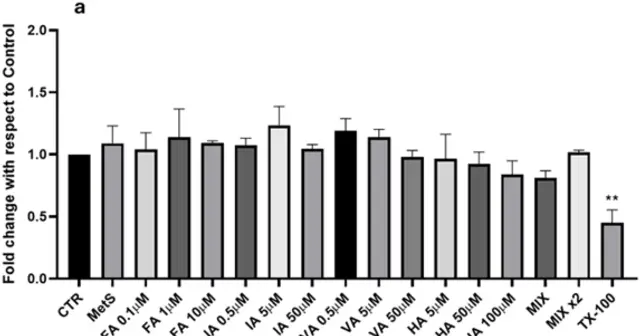
The study examined cells in an in vitro model of metabolic syndrome. In it, metabolites of polyphenols derived from wild blueberry slowed the shortening of telomeres, the structures at the ends of chromosomes. According to the source, this is a laboratory study in cells, not a trial in people. The text does not report how many samples were used or how long the experiments lasted.
Telomere shortening is studied as a marker of cellular aging, but results from cell models do not show what happens in the human body. An effect seen in a laboratory dish may not repeat in living tissue, and any link to health, lifespan or disease would require studies in people using appropriate methods.
What it means
This result points to a biological mechanism worth investigating, but it is preliminary and limited to cells. It is not yet known whether something similar happens in people, at what amounts, or whether it leads to health benefits.
How to read it with care
This finding does not replace a medical consultation. Anyone considering changes to their diet, supplements or any treatment should talk to a doctor or another qualified health professional.