


Long-term low-dose rapamycin and aging-linked immune cells
A study published in PLOS ONE reports that long-term exposure to low-dose rapamycin limited the expansion of age-linked gamma delta T cells and neuroinflammation, with small overall immune changes. The findings are preliminary.
Source: Long-term rapamycin curbs aging-linked immune cells in a study (journals.plos.org). Summary written with AI from the source and reviewed by rules; read the original.
What the research shows
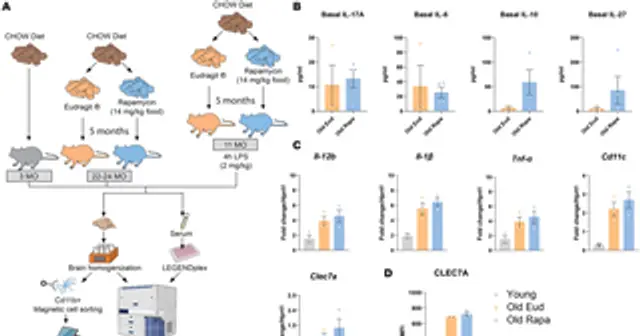
The study, published in PLOS ONE, examined the effects of long-term exposure to low-dose rapamycin. According to the source, the treatment caused small systemic immune changes but limited the expansion of age-linked gamma delta T cells and neuroinflammation. The aim was to investigate whether the mTOR pathway can influence aging-associated inflammation.
Rapamycin acts on the mTOR pathway, which is involved in cell growth and metabolism, and this pathway has been studied as a possible factor in the inflammation that accompanies aging. The result is interesting, but it is still preliminary: it does not show that the same happens in people, nor does it indicate any clinical use. Early studies like this help frame questions that need to be tested in larger and longer research.
What it means
The finding suggests the mTOR pathway may influence immune cells linked to aging and brain inflammation. It is not yet known whether this effect holds in people, under what conditions, or for how long, or whether it brings real health benefits.
How to read it with care
This result does not replace a medical consultation. Anyone considering any change in diet, supplements or treatment should talk with a doctor or another qualified professional before deciding.