


Epigenetic aging clocks and biological aging in men with cardiometabolic disturbances
A study of men with cardiometabolic disturbances compared different epigenetic aging clocks. Some, including GrimAge and DunedinPACE, detected accelerated biological aging, while first-generation clocks largely did not.
Source: Epigenetic aging clocks in men with cardiometabolic disease (link.springer.com). Summary written with AI from the source and reviewed by rules; read the original.
What the research shows
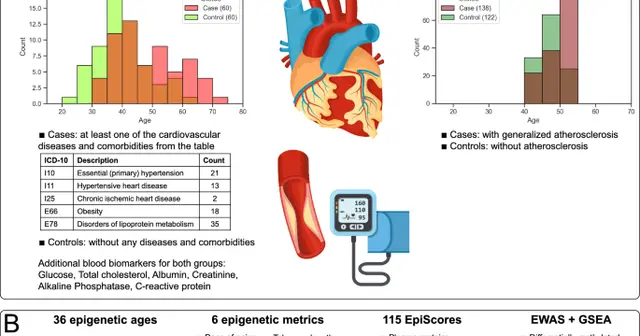
The study examined men with cardiometabolic disturbances and measured DNA methylation in whole blood samples, using epigenetic clocks to estimate biological aging. According to the publication's summary, GrimAge and DunedinPACE detected accelerated biological aging, while first-generation clocks largely did not.
Epigenetic clocks are tools that estimate biological age from chemical marks on DNA that change over time. They are not diagnostic tests for an individual, and different clocks can give different results for the same people, which affects how aging is measured in research. The available text does not give full details on sample size, duration or methods, so the results should be read as preliminary until those details are known.
What it means
The finding suggests that the choice of epigenetic clock can change the conclusion about biological aging in men with cardiometabolic disturbances. It is still unclear how much these measures translate into real health outcomes, or how they compare in other groups.
How to read it with care
This result does not replace a medical consultation. Anyone with questions about their cardiometabolic health should talk to a doctor or another qualified professional before changing habits, supplements or treatments.