


Mammal lifespan linked to SIRT6 phosphorylation sites
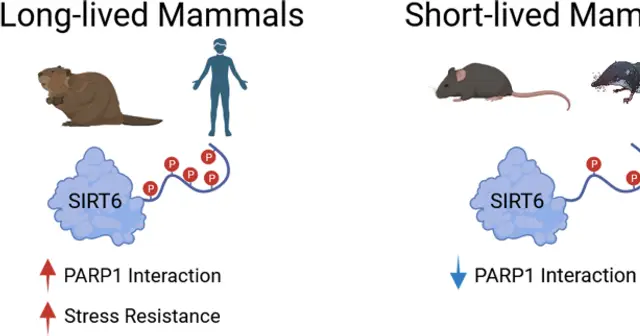
A comparative study across species links phosphorylation sites in the C-terminal domain of the SIRT6 protein to maximum lifespan in mammals, and points to a DNA repair protein as a possible factor in these differences.
Source: Mammal lifespan linked to SIRT6 phosphorylation sites (link.springer.com). Summary written with AI from the source and reviewed by rules; read the original.
What the research shows
A comparative study across mammal species reports that phosphorylation sites in the C-terminal domain of SIRT6 are strongly correlated with the maximum lifespan of each species. SIRT6 is a protein linked to DNA repair, and the study flags it as a possible factor behind lifespan differences between species.
Comparative studies across species show associations but do not prove cause and effect, because species differ in many ways at once, such as body size, metabolism and evolutionary history. A strong correlation is a starting point for future research, not a conclusion about how human aging works. Findings on animal lifespan do not translate directly into recommendations for people.
What it means
The result suggests SIRT6 may be involved in lifespan differences among mammals, which still needs to be investigated. It is not yet clear whether these molecular markers cause longer life or simply accompany other biological factors.
How to read it with care
This result does not replace a medical consultation. Anyone considering a change in diet, supplements or treatment should talk to a doctor or another qualified health professional.