


How to target senescent cells in the brain: what a Nature review says
A review published in Nature Reviews Drug Discovery gathers research on senescent cells in the central nervous system, including drugs in development that aim to remove them or modulate their effect on nearby tissue.
Source: Targeting Senescent Cells in the Brain: A Nature Review (nature.com). Summary written with AI from the source and reviewed by rules; read the original.
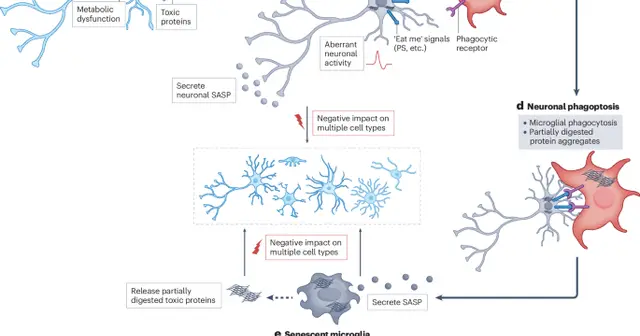
What the research shows
The review, published in Nature Reviews Drug Discovery, examines studies on senescent cells in the central nervous system, meaning cells that have stopped dividing but remain active and release substances that can affect other cells. It also discusses drugs in development that aim to eliminate these cells or change their secretory phenotype, the pattern of substances they release. As a review, the source summarizes and comments on work already done rather than reporting a new experiment.
Senescent cells are associated with aging in many tissues. Understanding them in the brain may guide research into age-related cognitive decline, but this is an ongoing area of investigation. The drugs mentioned are still in development, and reviews like this help map what is known and what remains to be clarified before any clinical use.
What it means
This review shows that senescent cells in the brain are an active research topic in aging and brain function. It is still unclear whether removing them or modulating their activity will bring safe and lasting benefits for people.
How to read it with care
A research finding like this does not replace a medical consultation. Anyone considering any change in diet, supplements or treatment should talk to a doctor or another qualified health professional.