


Medicine · 2
Studies, trials and discoveries in medicine, genetics and biology, explained without hype.
- MedicineArticle
Mildly elevated body iron linked to type 2 diabetes risk
A study reported by ScienceDaily suggests that even mildly elevated body iron may contribute to type 2 diabetes in the general population, not only in people with hereditary hemochromatosis.
- MedicineArticle
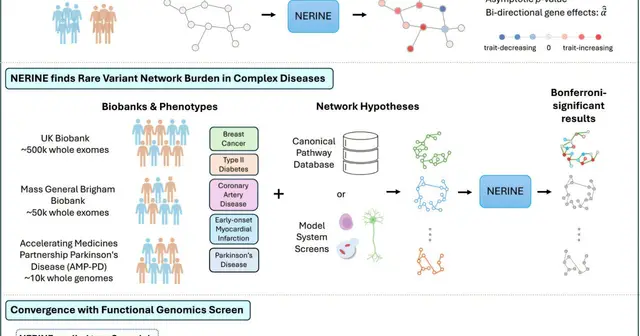
New computational framework links human genetic data with gene networks
Researchers describe NERINE, a computational method that combines large-scale human genetic data with gene networks from lab experiments to look for pathways linked to disease.
- MedicinePaper
Review examines mitochondrial therapies for neurodegenerative diseases
A review of the scientific literature examines current therapeutic approaches aimed at improving mitochondrial function in neurodegenerative diseases, including those affecting the brain. It maps research directions but does not prove that any of them work in patients.
- MedicinePost
Statins raise type 2 diabetes risk similarly in women and men
A review of 21 trials suggests statins raise type 2 diabetes risk by a small, similar amount in women and men.
- MedicinePaper
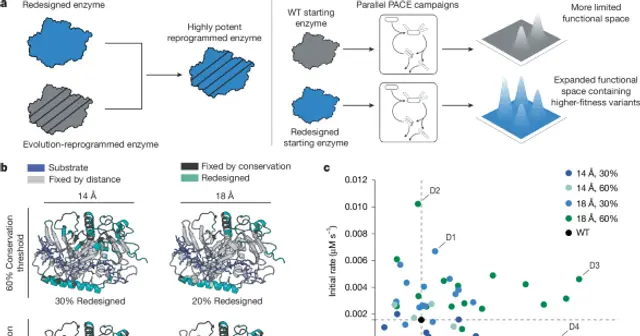
AI-redesigned starting points speed up enzyme evolution, according to a Nature study
A study published in Nature tested protein starting points redesigned by AI as the basis for evolving enzymes with improved properties, compared with enzymes evolved from natural proteins.
- MedicineArticle
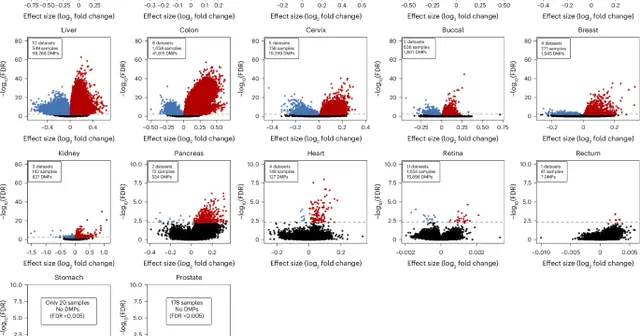
Cross-tissue meta-analysis maps DNA methylation signatures of human aging
A meta-analysis published in Nature Aging pooled DNA methylation data from 17 human tissues and described aging patterns shared across them, plus groups of genes that may be modifiable.
- MedicineArticle
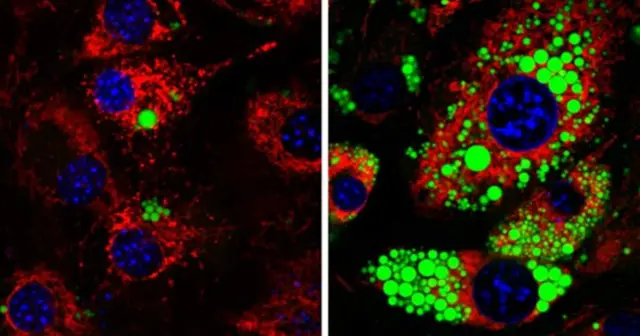
Disabling MTCH2 gene alters fat metabolism in mice and human cells
A study in mice and human cells reports that disabling the MTCH2 gene increased fat burning and prevented the formation of new fat cells. It is early laboratory research.
- MedicinePaper
Exercise for sarcopenia in older adults: systematic review findings
A systematic review and meta-analysis published in Scientific Reports found that exercise improved muscle mass, strength and physical performance in older adults with sarcopenia, with moderate certainty of evidence. For exercise combined with supplements, the certainty was low to very low.
- MedicineArticle
Hybrid physics and AI docking model tested on novel targets
An article proposes combining physics and artificial intelligence to predict how molecules fit biological targets, including targets the model had never seen, with prospective lab testing.
- MedicineArticle
Metabolic and hormonal changes during a 72-hour fast in healthy adults
A small pilot study of healthy adults reports metabolic, hormonal and glycomic changes during a 72-hour fast. The findings are preliminary.
- MedicineArticle
Molecular barrier to heart cell self-repair identified in new research
Researchers reported identifying CHST7 as a molecular barrier that keeps damaged heart cells from regenerating, according to a News-Medical news article.
- MedicineArticle
Open-source low-field MRI scanner design
An open-source project describes a low-field MRI scanner built with permanent magnets and 3D-printed parts. The developers say units have produced images in living people, but this has not been independently verified.
- MedicineArticle
Perspective on combining physics and AI in molecular design
A perspective article published in MedScience reviews how mechanistic learning methods, used alongside physics, are being integrated at different scales to design molecules that could become future medicines.
- MedicineArticle
Up to five cups of coffee a day may be safe for most adults, AHA says
The American Heart Association published a statement, based on a review of existing research, saying a moderate daily amount of caffeine is generally considered safe for most adults and appears linked to a lower risk of several cardiovascular diseases.
- MedicineModel
Alibaba's RADAR AI reads abdominal CT scans; performance claims still need independent testing
Alibaba has announced RADAR, an open AI model trained on more than 400,000 contrast-enhanced abdominal CT scans, using existing clinical reports. The developers claim specialist-level performance, but that claim still needs independent testing.
- MedicinePaper
Apollo: AI model trained on 33 years of hospital records
A preprint describes Apollo, an AI model trained on records from 7.2 million patients at US hospitals. The authors report good results on 322 clinical tasks, but the work has not yet been peer reviewed.
- MedicineArticle
Coffee compounds and mitochondrial health: a review
A review in the Journal of Translational Medicine links bioactive compounds in coffee, including caffeine, to the energy pathways of cells. It is an overview of an area still under development.
- MedicineArticle
Keto diet vs Mediterranean and low-fat plant diets in pre-diabetes and fatty liver
A randomized trial compared the keto diet with Mediterranean and low-fat plant diets in people with pre-diabetes and fatty liver.
- MedicineArticle
Near-infrared light boosts yeast growth in a deep-sea lab study
In a laboratory study of deep-sea yeast, near-infrared light at 880 nm increased growth, and blocking a mitochondrial enzyme reduced that effect.
- MedicinePost
Similar VO2 max gains from fewer, longer workouts when volume matches
A study reports that training 4 times a week with shorter sessions or 2 times a week with longer sessions led to similar changes in VO2 max when total exercise volume was matched.
- MedicinePaper
Sunlight exposure linked to lower blood glucose and type 2 diabetes
An observational study in Scientific Reports links greater sun exposure, measured as UVA, to lower blood glucose in winter and a lower chance of a type 2 diabetes diagnosis.
- MedicineArticle
Synthetic molecule SK-129 targets Parkinson's protein clumps in mice
A study in mice reports that the synthetic molecule SK-129 blocked toxic protein clumps linked to Parkinson's and reduced symptoms of the disease. This is early research, not yet tested in people.
- MedicinePost
FDA approves VIZZ eye drop for presbyopia, age-related loss of near vision
The FDA has approved VIZZ, an eye drop based on aceclidine, for presbyopia. According to the article, in clinical trials with people, near vision improved within 30 minutes, with side effects generally mild and temporary.
- MedicinePost
Gemini AI reads wearable data to guide sleep and fitness
A DeepMind article tests whether a fine-tuned Gemini model can interpret data from wearable devices about sleep and physical fitness.





 arxiv.org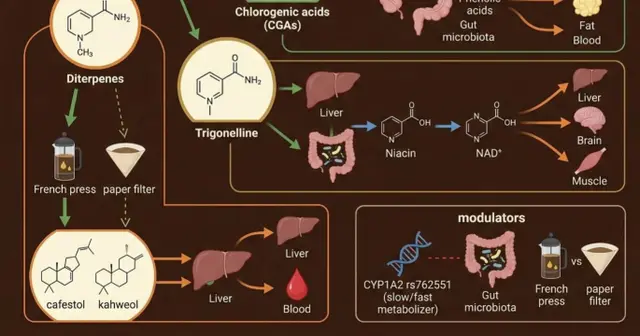
Not medical advice · Learn more