


New computational framework links human genetic data with gene networks
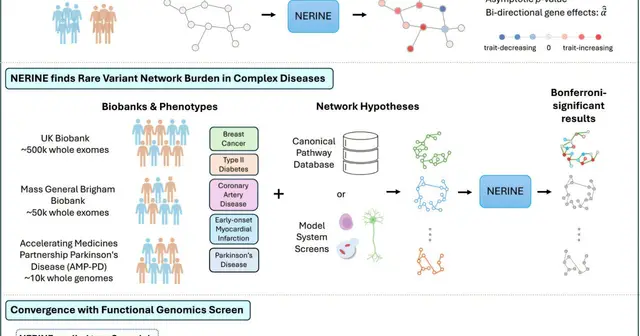
Researchers describe NERINE, a computational method that combines large-scale human genetic data with gene networks from lab experiments to look for pathways linked to disease.
Source: New framework links human genetic data with gene networks for disease study (medicalxpress.com). Summary written with AI from the source and reviewed by rules; read the original.
What the research shows
The article describes researchers who developed NERINE, a computational framework. It combines large-scale human genetic data with gene networks obtained from experiments, aiming to identify pathways associated with disease and possible therapeutic targets. According to the report, linking these laboratory networks to human data may help prioritize relevant genes in complex diseases, and Parkinson's disease is given as an example.
Complex diseases often involve many genes at once, and sorting out which ones matter most is difficult. Methods like this work as screening tools: they suggest where to look, but they do not by themselves show that a gene causes a disease or that a treatment will work. A finding of this kind usually needs to be checked in further studies before it has any clinical relevance.
What it means
The framework appears to be a way of organizing large amounts of genetic information to suggest genes and pathways worth investigating further. It is not clear from this material how well it performs in practice, or whether its suggestions will lead to real therapies.
How to read it with care
This is early research on analysis tools, not a health recommendation. A result like this does not replace a medical consultation. Anyone considering a change in diet, supplements or treatment should talk to a doctor or another qualified health professional.