


Taurine rises with age in people and mice, study finds
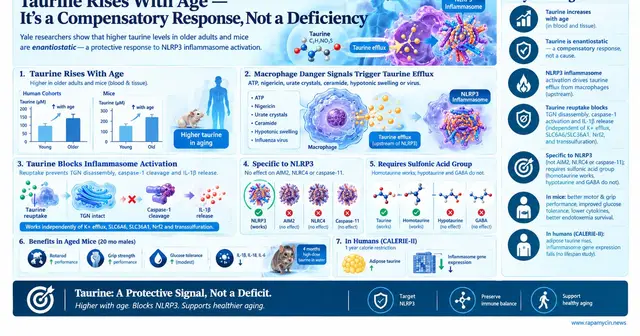
Yale researchers measured taurine in two human cohorts and in mice. Levels rose with age, which challenges the idea that a drop in taurine drives aging.
Added on today
Source: Taurine Rises With Age in People and Mice, Study Finds (rapamycin.news). Summary written with AI from the source and reviewed by rules; read the original.
What the research shows
Researchers at Yale measured taurine, an amino acid found in the body, in two groups of people and also in mice. In both, levels rose as age increased. According to the authors, this rise appears to be a compensatory response to the NLRP3 inflammasome, a part of the immune system linked to inflammation.
The study challenges the idea that a decline in taurine drives aging. This matters for understanding inflammation linked to age, because it suggests the relationship may be different from what was assumed. Since part of the data comes from mice, the findings do not translate directly to people and need confirmation in other studies.
What it means
The finding indicates that taurine tends to increase with age, rather than only decline, in both people and mice. It is still unclear whether this rise has any effect or simply reflects inflammatory changes, or what it would mean in practice.
How to read it with care
This result does not replace a medical consultation. Anyone considering changes to diet, supplements or treatment should talk to a doctor or another qualified health professional.