


mTORC1 as a possible driver of brain aging: what a review says
A review describes the protein mTORC1 as a possible factor in brain aging when it stays chronically overactive, linked to mitochondrial dysfunction and neuroinflammation.
Source: mTORC1 as a possible driver of brain aging: a review (link.springer.com). Summary written with AI from the source and reviewed by rules; read the original.
What the research shows
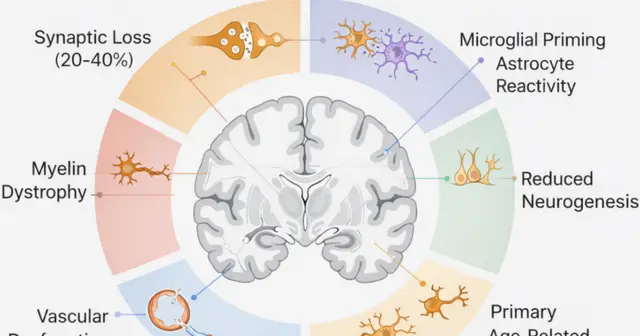
The review presents mTORC1, a regulator of cell growth and metabolism, as a possible factor in brain aging when it remains chronically overactive. According to the text, this overactivity is linked to mitochondrial dysfunction, which affects how cells produce energy, and to neuroinflammation, a low-grade inflammation in brain tissue. The review points to a possible shared biological path in brain aging and neurodegenerative diseases.
This kind of work gathers and discusses previously published research; it is not a clinical trial in people. So the idea of mTORC1 as a driver of aging remains a hypothesis to be tested, not an established conclusion. Readers should understand that the review does not show that acting on this pathway improves brain health in humans.
What it means
The review suggests that one shared biological process, overactivity of mTORC1, may contribute both to brain aging and to neurodegenerative diseases. It is still unknown whether this holds in people, and how much this pathway matters compared with other factors.
How to read it with care
This finding does not replace a medical consultation. Anyone considering a change in diet, supplements or any treatment should talk to a doctor or another qualified health professional.