


Doxifluridine extends worm lifespan through bacterial metabolism
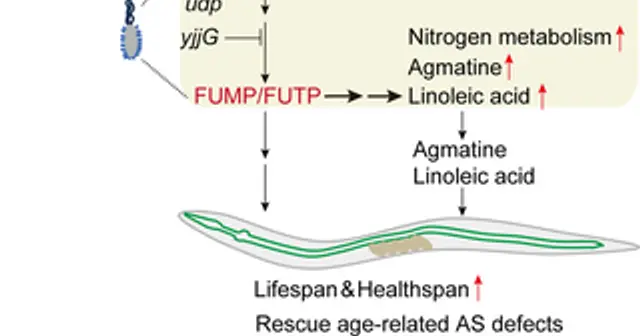
A study in C. elegans worms found that doxifluridine reversed age-associated splicing defects and extended the animals' lifespan. The results are preliminary and have not been tested in people.
Source: Doxifluridine Extends Worm Lifespan Through Bacterial Metabolism (journals.plos.org). Summary written with AI from the source and reviewed by rules; read the original.
What the research shows
A laboratory study screened compounds in C. elegans worms, small worms widely used in aging research. The researchers found that doxifluridine reversed age-associated splicing defects, the process by which cells assemble genetic instructions, and that the worms lived longer. The title attributes this effect to bacterial metabolism, meaning how gut bacteria process the substance.
These results are preliminary and come from animals, not people. Worms have short lives and biology very different from ours, so an effect seen in them does not guarantee a similar result in people. The study helps explain how gut microorganisms may influence aging pathways, an area of strong scientific interest, but further research in other models and then in humans is still needed.
What it means
The research suggests that gut bacteria may interfere with processes linked to aging in worms. It is not yet known whether the same happens in mammals or humans, or which mechanisms would matter outside the laboratory.
How to read it with care
This is an animal study and does not replace a medical consultation. Anyone considering changes to diet, supplements or treatment should talk to a doctor or another qualified health professional.