


Aging · 4
Filter by type: All230
- 12 days ago lifespan.io
Placental cells may help test anti-aging compounds
Researchers reported in the journal Aging Cell that cells derived from the human placenta may help estimate possible anti-aging treatments. The evidence so far comes from cell studies, not studies in people.
- 12 days ago renascience.co.jp
Preliminary XPRIZE Healthspan trial reports anti-aging effects of a drug candidate
A news article reports preliminary results from a semifinal XPRIZE Healthspan clinical trial in people, in which a drug candidate from Tohoku University reportedly showed anti-aging effects.
- 12 days ago sciencealert.com
Replacing mitochondria to recharge aging human cells: what the news reports
A ScienceAlert article reports new research in which aging human cells were 'recharged' by replacing their mitochondria, the structures that supply energy to the cell.
- 12 days ago nature.com
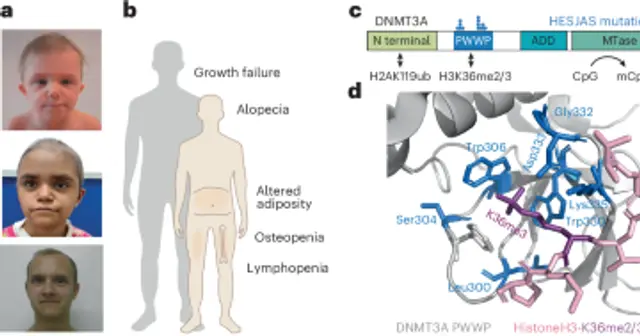
Changes in DNA methylation linked to accelerated ageing in mice and people
A study published in Nature Genetics reports that gain-of-function DNMT3A mutations, which affect DNA methylation, show signs of accelerated ageing in patients and mice.
- 12 days ago clinicaltrials.gov
First patient treated in Phase 1 trial of ER-100 epigenetic therapy
Life Biosciences reported that the first patient has been treated in a Phase 1 trial of ER-100, an experimental epigenetic therapy. The trial assesses safety, tolerability and visual function in people.
- 12 days ago
 biorxiv.org
Machine learning predicts drugs that extend lifespan in worms
A preprint used machine learning models trained on mouse longevity data to flag possible anti-aging candidates. In C. elegans worms, 6 of 22 predicted compounds extended lifespan.
- 12 days ago techtimes.com
Mayo Clinic team uses DNA aptamers to tag senescent cells in mice
Mayo Clinic researchers reported, in a study in mice, that synthetic DNA molecules called aptamers can reliably tag senescent cells in tissue.
Review links epigenetic drift and cell stress to senescence in aging
A review discusses how epigenetic changes and cell stress may lead to senescence, a process linked to aging and age-related diseases.
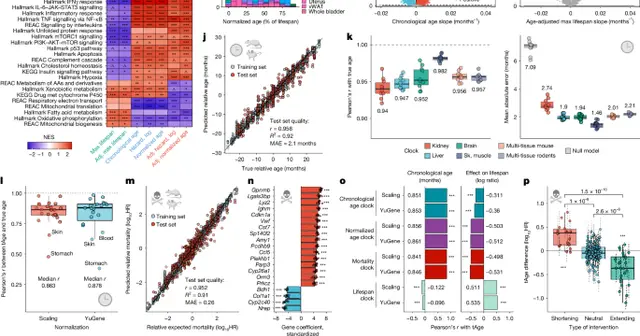
Shared gene expression signatures of aging across four mammals
A study published in Nature combined more than 11,000 transcriptomes from over 25 tissues in four mammal species to build aging clocks. The work is done in animals.
- 12 days ago nature.com
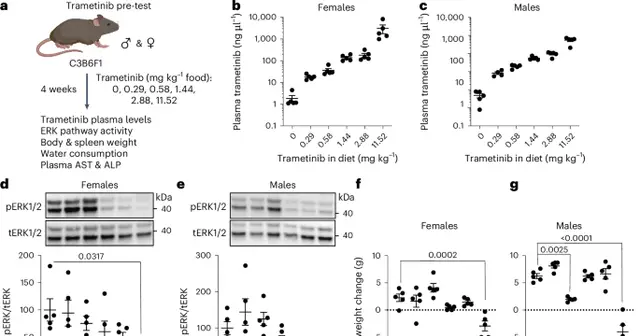
Trametinib and rapamycin extend lifespan in mice, study finds
A study in mice published in Nature Aging found that trametinib extended the lifespan of both males and females. Combined with rapamycin, the effect was additive and also reduced inflammation and tumor growth.
Anti-IL-11 antibodies in mice and a report of longer lifespan
A social media report describes mice treated with anti-IL-11 antibodies living 20% to 25% longer. The source is an animal study, with no indication of the same effect in people.
Canagliflozin, senescent cells and aging in mice: what the study suggests
A study in mice published in Nature Aging links the effect of canagliflozin, a diabetes medicine, to the removal of senescent cells. The findings are early, come from animals, and do not show anything about people.
AMPK-linked protein tied to metabolism and lifespan in worms
A study in worms reports that AMPK activates the protein NUP50, which also affects metabolism, and that higher levels of it were associated with longer lifespan in these animals.
Clearing senescent cells in aged mice extended lifespan in one study
One study in mice reports that monthly clearing of senescent cells reduced inflammation, improved physical and metabolic health and extended lifespan, especially in females. The results are early and come from animals.
Mice study: gene reprogramming partly reversed eye aging
A Harvard study in mice reports that three genes used to reprogram eye cells helped attenuate eye aging and restore vision. The result comes from animals and is still preliminary.
Partial reprogramming and the idea of epigenetic rejuvenation
An opinion-toned article explains partial reprogramming with Yamanaka factors, a research line proposing cellular rejuvenation. The approach is still under testing and is not a proven way to slow aging.
Preprint: FAM162A overexpression linked to longer fruit fly lifespan
A preprint reports that fruit flies overexpressing the mitochondrial protein FAM162A lived about 25% longer, in an animal study not yet peer reviewed.
Preprint links DNA methylation change rates to aging drift
A preprint reports patterns in how quickly DNA methylation changes at specific sites, changes the article says build up over time as aging drift. The work is preliminary and has not yet been peer reviewed.
Smaller nucleolus linked to slower aging in yeast study
A study in yeast cells reported that keeping the nucleolus small appeared to slow aging, to a degree similar to calorie restriction. The results come from yeast, not people.
Very long-lived people may offset markers of aging
A preprint analyzed the biological profile of a 118-year-old person and found that shortened telomeres and mutated blood stem cells did not necessarily predict poor health.
Young blood stem cells and the lifespan of old mice
A study in mice reports that transplanting young blood stem cells into old animals may ease signs of aging and extend lifespan. This is early animal research with no direct application to people yet.
AI identifies senescent cells by the shape of their nuclei
An article reports an artificial intelligence tool, developed by researchers at NYU, that identifies and tracks senescent cells based on changes in their nuclei. The article does not present clinical results.
Early NewLimit data report partial restoration of youthful liver cell function
A founder of the company NewLimit reports preliminary experiments in which the prototype drug M0004, tested in disease models, partly restored function in aged liver cells. The results have not been peer reviewed.
Fisetin clears senescent cells and prevents aortic aging in mice
In a study of diabetic mice, fisetin, a polyphenol found in strawberries, cleared senescent cells and prevented aging of the aorta.

Not medical advice · Learn more