


Mental health · 2
Filter by type: All32
- 19 days ago x.com
Single creatine dose linked to brain changes in sleep-deprived adults
A Scientific Reports study of 15 healthy people kept awake for 21 hours found that a single creatine dose improved cognitive performance and changed brain energy metabolism within hours, under specific metabolic conditions.
- 19 days ago x.com
Bowel evacuation linked to faster Stroop times in elite triathletes
A randomized crossover trial in elite triathletes found faster Stroop test response times after bowel evacuation. Near-infrared measurements of the prefrontal cortex showed no relevant change.
- 19 days ago x.com
L-theanine trial links lower stress and cortisol in people
A double-blind, placebo-controlled, crossover trial in people found that an L-theanine drink reduced self-reported stress and cortisol during a cognitive stressor. Alpha brain activity rose only in people with higher anxiety.
- 19 days ago x.com
Review links physical activity to brain waste clearance with aging
A review published in Trends in Neurosciences looks at how physical activity may regulate the glymphatic system, which helps clear proteins linked to Alzheimer's, such as beta-amyloid and tau.
- 19 days ago x.com
Saffron and antidepressants show similar results in small studies
A 2025 meta-analysis pooled eight studies with people and found no significant difference between saffron and SSRI antidepressants for mild to moderate depression.
- 19 days ago x.com
Study in Neuron links tau protein and mitochondrial damage in Alzheimer's
A study led by Stanford and published in the journal Neuron describes a cycle in which tau protein damages mitochondria, and mitochondrial signals in turn worsen tau.
- 19 days ago longevity.technology
First patient treated in phase 2 trial of an oral tablet for the eyes
A news article reports that a phase 2 trial of BGE-102, an oral tablet based on aging research and aimed at preserving vision, has treated its first patient. No results have been reported yet.
- 19 days ago nature.com
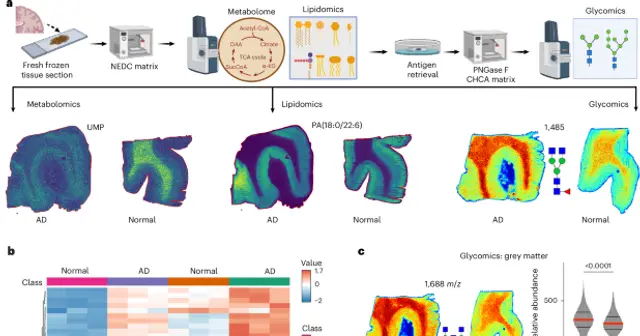
Hyperglycosylation Is Pointed to as a Factor in Alzheimer's Disease
A study combining spatial multiomics, isotope tracing and retrospective cohort analyses points to hyperglycosylation, a change in how sugars attach to proteins, as a possible factor in Alzheimer's disease.

Not medical advice · Learn more