


AI screening finds possible antimicrobial peptides in prion proteins
An AI screen of 19.3 million peptide fragments from 2,897 prion-related proteins flagged 1,179 possible antimicrobial candidates, and two reduced infections in mice in early results.
Source: Deep learning finds antimicrobial peptides within prion proteins (nature.com). Summary written with AI from the source and reviewed by rules; read the original.
What the research shows
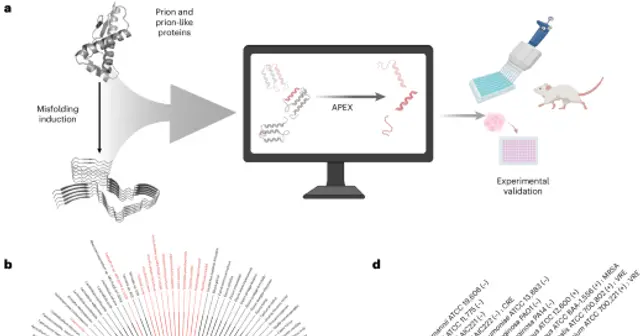
The study used artificial intelligence to scan 19.3 million peptide fragments taken from 2,897 prion-related proteins. The software identified 1,179 candidates that may act against microbes, which the authors call prionins. According to the article's preview, two of these candidates reduced infections in mice.
Prion proteins are best known for their link to neurodegenerative diseases, in which misfolded proteins damage brain tissue. This work suggests that some of these proteins may also carry molecules able to fight bacteria. The findings are early: the screen was computational and the infection results come from animal experiments, so they do not show whether anything similar would work in people.
What it means
The finding means some prion-related proteins may contain fragments with antibacterial activity, a possibility worth testing. It is still unknown whether these candidates are safe or effective in people, how well they work outside mice, and whether they could be developed into treatments.
How to read it with care
Treat this as early laboratory and animal research, not as a basis for changes to health. A result like this does not replace a consultation, and anyone considering a change in diet, supplements or treatment should talk to a doctor or another qualified professional.