


AI imaging maps obesity-related nerve damage across mouse organs
A Nature study used the MouseMapper AI tool to scan nerves and immune cells in 31 mouse organs. It reports obesity-related nerve damage beyond the extremities, and some of this may relate to GLP-1 drugs in humans.
Source: AI imaging maps obesity-related nerve damage across mouse organs (medscape.com). Summary written with AI from the source and reviewed by rules; read the original.
What the research shows
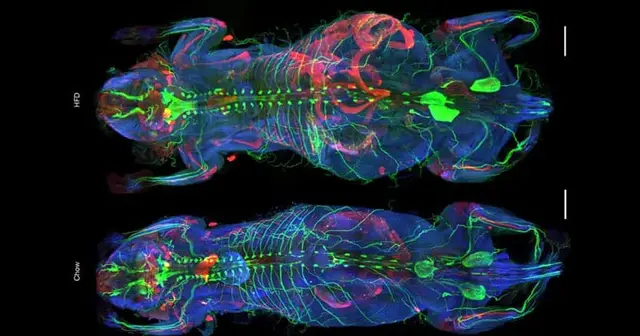
The Nature study used the MouseMapper AI tool to scan nerves and immune cells across 31 organs in mice. The researchers report obesity-related nerve damage that is not limited to the extremities, such as the hands and feet. According to the source, some of this damage may relate to GLP-1 in humans, a class of drugs that is widely prescribed today.
This is an animal study, so its results do not directly show what happens in the human body. It is still unclear what effect these drugs have on nerve health in people, and research in humans is needed to answer that question. Obesity and its treatments affect the body in complex ways.
What it means
The finding suggests that obesity may affect nerves in many organs, not only in the extremities. The extent of this effect in people, and the exact role of GLP-1 drugs in it, remain unknown.
How to read it with care
This is a mouse study and does not replace a medical consultation. Anyone considering changes to diet, supplements or treatment should talk to a doctor or another qualified professional.